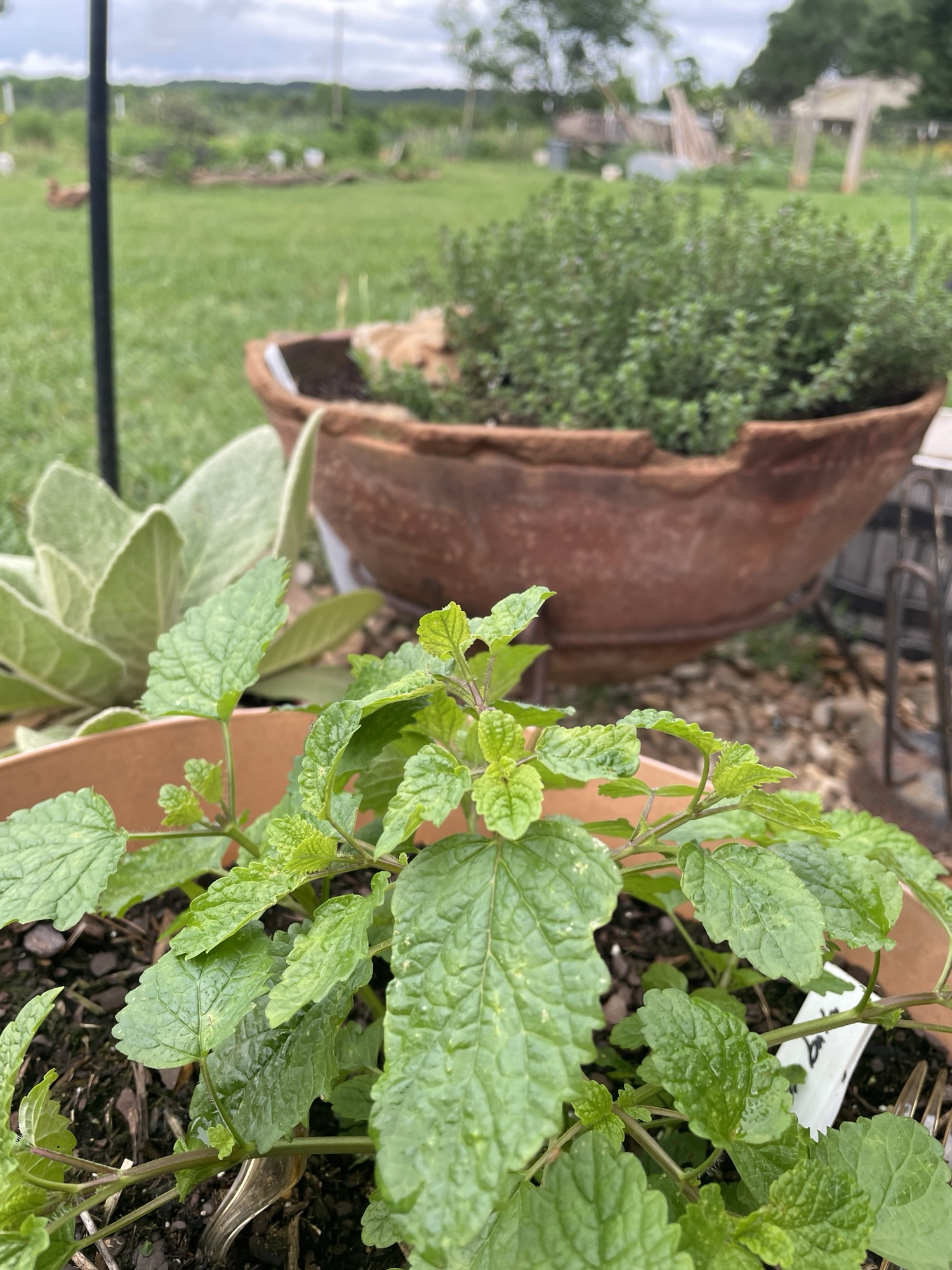
When we talk about community preparedness, as we tend to do around here 😂, it could be incredibly easy to slide into the language of stark utility. We count calories, calculate the storage life of dry beans, map out regional water security, and analyze the raw architecture of basic survival. This is hard, practical work, and it matters. But if we limit our vision of the tasks of the future strictly to what keeps the biological machine running, we are missing the point entirely. Resilience should not be merely a series of calculations that result in physical survival; it is the active, stubborn preservation of our humanity, so that living continues to be good, full of dynamic and nuanced memories, and rich with opportunity for more sensorial experience.
Part of being a whole person within a whole community is ensuring that our local landscapes are not just secure, but beautiful and abundant with sources of sensuous joy. I do not mean that word in the modern, sexualized sense. I mean it in its truest, most foundational definition: what actively engages and honors the human senses. To interact with the physical world through scent, texture, and taste is an act of grounding. It reminds us of exactly where we stand, connects us to the dirt beneath our feet, and keeps us anchored when the world outside feels fractured and chaotic.
“Resilience should not be merely a series of calculations that result in physical survival; it is the active, stubborn preservation of our humanity, so that living continues to be good…”

We were reminded of this truth in a spectacular way this week. We’re not big-shots online but got quite the response when we posted a simple question on our Threads channel, looking to move past the typical kitchen mainstays like rosemary, mint, or dill. We asked our community: What is one less common herb you grow strictly for the scent of its leaves or flowers?
The response was overwhelming, beautiful, and deeply insightful. It turned into a living archive of sensory joy, spanning geographical borders and deep personal histories. It reminded us that a community food forest or a resilient home garden should never just feed the stomach—it must feed the spirit.
The Uncommon Botanicals of Our Collective Landscape (or If it is a Battle, Lemon Wins)
The suggestions left by folks in the comments point toward a much broader, more vibrant palette of plants than the usual suspects. Now, don’t get me wrong—a single sprig of common rosemary (in my top three herbs for memory inducing fragrance) or a leaf of peppermint can completely ground you and spark a deep sensory connection. You don’t need a rare, certified-organic botanical degree to be a whole human being. But if you are looking to expand your sensory landscape a bit, it turns out there’s a whole world of aromatic weirdness and wonder waiting past the edges of the standard hardware store herb rack. (No shade Lowe’s, Tractor Supply, Atwoods, Walmart and Kroger, but you all sell the exact. same. plants.) Behold, the collective wisdom of the internet:
- Lemon Verbena & Scented Geraniums (Aloysia citrodora & Pelargonium): Brought forward by multiple folks for their pure, bright citrus notes and rich, varied textures. These aren’t just plants you look at; they are plants you are compelled to touch, running your fingers along the leaves to release a sharp, clean clarity into the air.
- Sweet Cicely / Garden Myrrh (Myrrhis odorata): A beautiful addition from our international community, known as Roomse kervel in the Netherlands. It carries a rich aniseed and liquorice aroma. While historically used in regional traditional dishes like kruudmoes, which I’ve never tried, its value often lies in the sensory environment it creates just by existing near a garden path.
- Blue Fortune Agastache & Bronze Fennel (Agastache ‘Blue Fortune’ & Foeniculum vulgare ‘Purpureum’): Both highlighted for their deep, sweet, licorice-like profiles. Bronze fennel is one we planted here at the Truck Patch for the first time this season at the north end of our herb bed, and seeing it flourish has been an absolute delight.
- Rue (Ruta graveolens): One person noted that they grow rue for its pollinators, its beautiful, “otherworldly” blue-green leaves, and its highly specific, strange scent that is recognizable anywhere. They admitted to occasionally nibbling a leaf just to remind themselves of how fiercely awful it tastes—a raw, unvarnished reminder that the natural world offers experiences that jar us awake and make us laugh. Side note: for about an hour I thought we were talking about roux, which is of course not a plant, but because I’ve never made roux, I made a few leaps in logic.
- Blue Vervain (Verbena hastata): A plant with a zestier, but to me understated, scent, but one that holds deep value. Here at the farm, we have an incredible abundance of wild blue vervain growing across our landscape. White vervain came up and reading the community’s appreciation for it was a gentle nudge that we need to be making much better, more intentional use of it in our daily routines, as it is abundant here. Perhaps I’ll see about making a tincture?

The Defiant Act of Planting For Joy
There is a distinct, dangerous trap in individualistic “bunker” preparedness. It breeds anxiety, fosters isolation, and focuses entirely on defensive survival. But biological sovereignty, in the communal resilience sense, is built on a completely different foundation. It is built on the concept of communal abundance, mutual aid, caretaking, and the deliberate creation of spaces where people actually want to gather, share, and simply put, sense the things the natural world has to offer.
If we strip our landscapes down to pure, unadorned caloric output, we are preparing to survive in a world devoid of color. And frankly, a world without color isn’t a world worth defending. By intentionally planting things like blue vervain (got it), sweet cicely (don’t got it), scarlet beebalm (don’t got it), marjoram (got it), and even the challenging rue, we are asserting that the future we are building is one worth living in. We are storing up joy, memory, and connection alongside our staples.
As you plan your garden beds, your sheet-mulched rows, your local community plots, or your backyard food forests this and next season, look beyond the basic household names. Plant something that requires you to slow down, lean over, crush a leaf between your fingertips, and breathe in deeply. Do it to anchor yourself if it is an old favorite, or to create entirely new pathways in your brain if you’ve never smelled it before. Do it so that when you show up to support your neighbors, your family, and your town when the world outside feels fractured, you are doing so as a whole, fully realized, and expanding human being. Service to others isn’t just about keeping people alive; it’s about remembering why we want to be alive in the first place.
Thank you to everyone who shared a piece of their garden with us in that conversation. You didn’t just give us a list of plants; you reminded us exactly what we are working so hard to protect.
Pull up a chair at our digital table:
Resilient communities aren’t built in isolation, and the conversation doesn’t stop here on the blog. We are actively sharing daily field notes, farm realities, and community ideas across our spaces, and we’d love to have your voice in the mix:
- For daily banter and quick garden thoughts: Come hang out with us on Threads.
- For the visual reality of the patch: Follow our reels and farm updates on Instagram or Facebook.
- For a deeper look into our projects and how-tos: Subscribe to our channel on YouTube.
A don’t forget to pick up your pay-what-you-want copy of our Go Bag Checklist to help support us!


Leave a Reply